
Water
The introduction to my next book

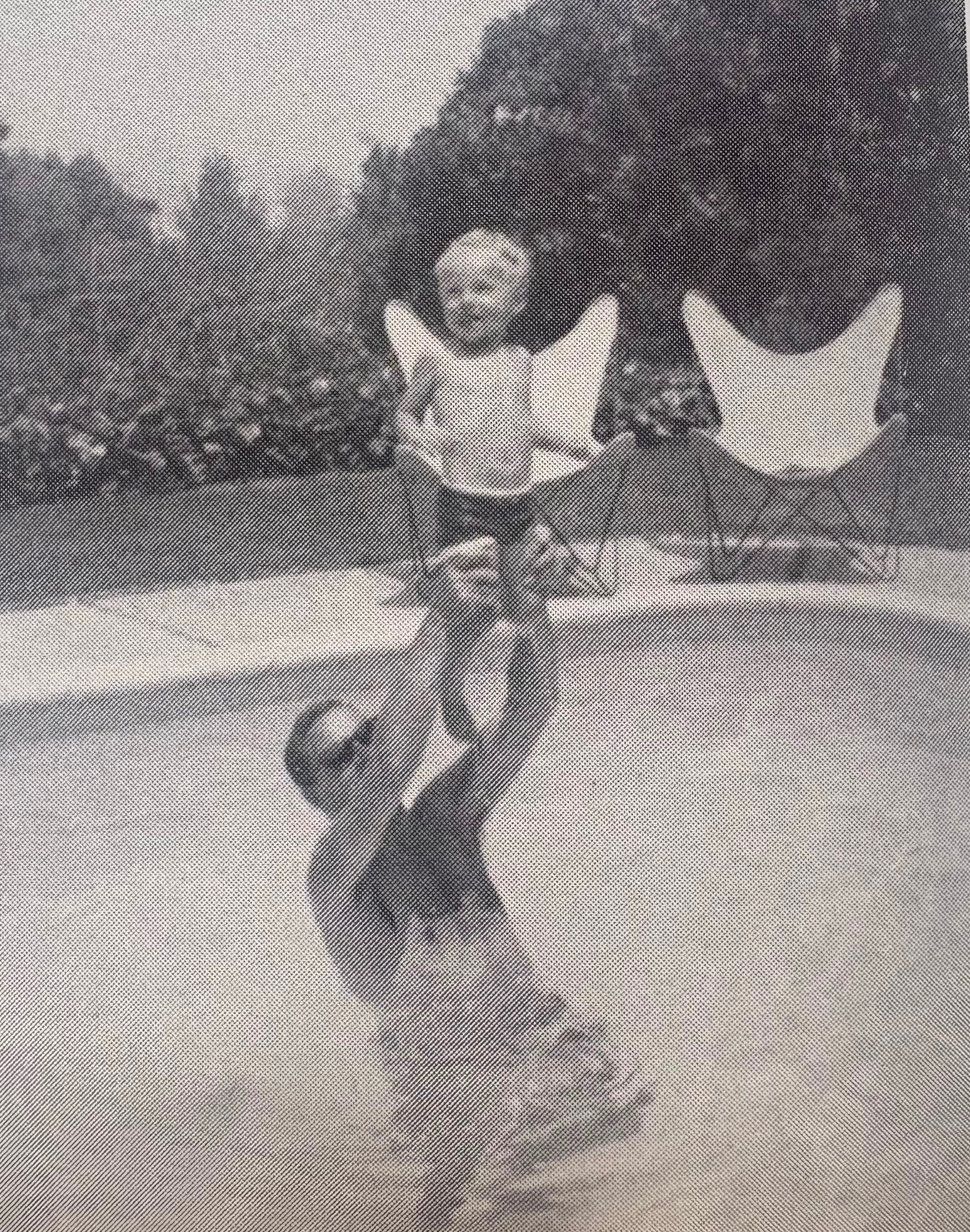
If there is a throughline in my life, it is water.
My mother never learned to swim, but when she found me floating, face down, in the center of the pool, Joan Tewkesbury did not scream, panic, call the fire department, or run to the neighbors. She put her fear on the shelf, stepped into the water and began walking towards my motionless, not yet two-year-old body. Just before my mom’s head went under, she grabbed the coping, took a breath, and tiptoed towards me until she could grab my foot. Joan slowly pulled me to the shallow end where she was able to jumpstart me before there was any permanent damage.
My mom’s first phone call was to our old, unflappable Mexican pediatrician. After he assured her that I would be fine, she called the swimming school and requested their harshest drill sergeant. Days later, aquatic boot camp began. I remember our swimming teacher as a Southern California version of Popeye’s Sea Hag— chlorine-fried hair, skin like Cordovan leather and the sensitivity of Full Metal Jacket’s Gunny Hartman.

Recently, I checked this memory with my mom, and she told me that our teacher was a pretty, athletic, college coed. Irrespective of my distorted memory, she was an excellent teacher.
While I have no memory of drowning, I vividly remember my first swimming lesson. It was sink or swim in the truest sense. There was no fun or games—only inhaling water, coughing it up, gasping for air, and the instinctual, crotch-tingling, primeval effort to keep my head above water. In less than an hour, she pushed me way beyond my previously known limits of the possible.
From that day on, the sound of the Sea Hag’s car pulling into our driveway was like the hoofbeats of the Mongol hordes to my sister and me. We tried to run but were shocked when Joan sold us out and delivered us to the enemy. Then, no matter how hard we were crying, my mom got into her car and drove away.
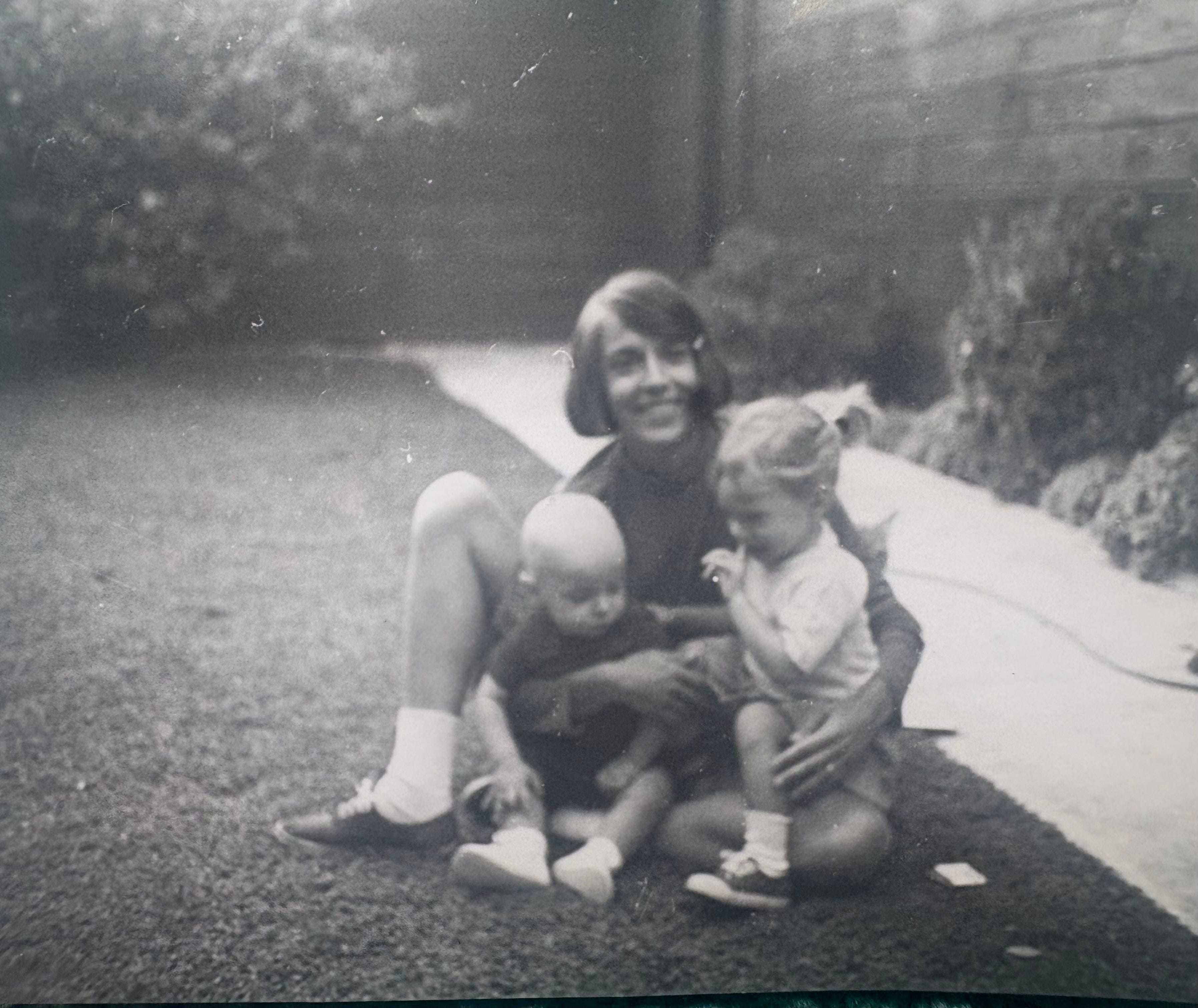
In very short order, I learned to swim from one side of the pool to the other without panicking, inhaling water, or sinking. Next, I learned to swim under water, and it was sublime. Instead of long-term psychological damage, thanks to the Sea Hag, water became my happiest place.
By two, I was riding my trike off the diving board, then sinking eight feet to the bottom still mounted. After a three-point landing near the drain, I would furiously attempt to pedal to the shallow end. Many years later, my father told me that he was impressed by my ability to hold my breath, but more impressed by my tenacity.
While both of my parents believed that children should be seen and not heard, initially I refused to comply. I was born a month premature and was disagreeable from day one. Allergic to both breast milk and cow’s milk, I lived unhappily on soy milk and cried constantly. This irritated my father, a man of few, but loud words.
Directly touched by the poverty of the Great Depression, then the fury of World War II, my parents were members of the “Silent Generation” (1928-1945). What they faced as children and teens forged them into stoic, self-reliant, driven, and extremely successful people. They had high expectations for my older sister and me and held us to high standards. As a result, my early upbringing was more The Great Santini than Doctor Spock.
Like lions with their cubs, my parents’ love was unconditional, but at times brutal. For me, the 1960s and 1970s were the cause-and-effect era. If you did something stupid the consequences were immediate. When Joan asked, “Do you want the wooden spoon?” it was a rhetorical question. Before the last word left her lips, the long-handled wooden spoon was locked, cocked and the first stinging blow was headed towards your ass. Without the intervention of shrinks or pills, they inoculated me against the affluenza-related “syndromes” and “disorders” that crippled so many of my peers.
At 60, my outlook is more Buddhist than Freudian. When I say that I was raised by lions, I say that with great respect, love and admiration for my unusual parents. They did not just give me life and opportunity; they were also careful not to make my nest too soft. Without them and the experiences of my youth—good, bad, and ugly—I never would have pulled anchor at eighteen and left these enervating waters for parts unknown in 1983. And although I would never live there again, Southern California’s now nearly extinct Waterfront Culture shaped me and will be a part of me until the day I die.